 +5551984289574
The historic Lithuanian basketball staff BC Žalgiris, from Kaunas, gained the European basketball league Euroleague in 1999. Lithuania has produced a variety of NBA players, including Naismith Memorial Basketball Hall of Fame inductees Arvydas Sabonis and Šarūnas Marčiulionis, and present NBA gamers Jonas Valančiūnas and Domantas Sabonis. Modern Lithuanian education system has multiple structural issues. Insufficient funding, high quality points, and reducing pupil population are probably the most prevalent.
Ethnic composition of Lithuania
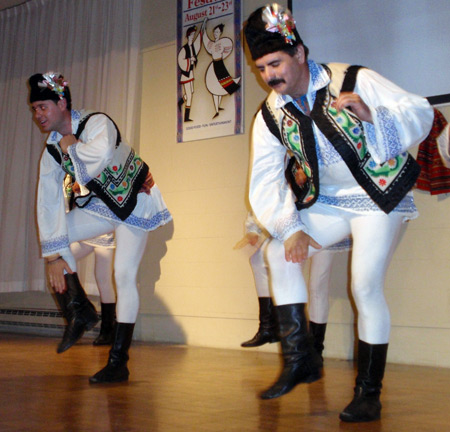
The historic communities of Lipka Tatars preserve Islam as their religion. The Lithuanian Jewish group numbered about four,000 at the end of 2009. According to the 2011 census, 77.2% of residents of Lithuania were Catholics. Catholicism has been the principle faith since the official Christianisation of Lithuania in 1387.
A particular safety department handles VIP protection and communications security. In 2015 National Cyber Security Centre of Lithuania was created. Paramilitary organisation Lithuanian Riflemen’s Union acts as civilian self-defence establishment. Capital punishment in Lithuania was suspended in 1996 and fully eradicated in 1998.
Candidates usually are not allowed to stand for election in more than one country. Persons serving or as a result of serve a sentence imposed by the courtroom sixty five days earlier than the election usually are not eligible. Also, judges, residents performing army service, and servicemen of skilled navy service and officers of statutory institutions and establishments could not stand for election. Six political parties and one committee representatives gained seats within the 2019 elections. On 25 October 1992 the citizens of Lithuania voted in a referendum to undertake the current constitution.

Orlen Lietuva bought over €3.5 billion value of products outside Lithuania, in comparison with the total Lithuanian exports of €24 billion in 2014. About 40 % of surveyed buyers confirmed that they finishing up Research and experimental growth (R&D) or plan to do it of their Lithuanian branches. In 2018 Lithuania ranked as the second most attractive location for manufacturers in the Manufacturing Risk Index 2018. In 2019, Lithuania was 16th in Top 20 European FDI destination international locations listing, created by the Ernst & Young.
Since the beginning of the year 2009, prices for warehousing premises have dropped by 20–25% in Vilnius, Kaunas, and Klaipėda, and the current level of rents has reached the level of 2003. The prices for renting new warehouses in Vilnius, Kaunas, and Klaipėda are similar and attain 0.75 to 1.42 EUR/m2, whereas the rents of outdated warehouses are zero.35 to 0.67 EUR/m2. Lithuania’s life science sector is growing around 20–25% yearly; with particular focus on the production and research of biotechnology, pharmaceutical and medical units. Development of shared providers and enterprise process outsourcing are a number of the most promising fields.
History as much as the twentieth century
The project was funded by the European Union and the Lithuanian government. seventy two% of Lithuanian households have access to web, a number which in 2017 was amongst EU’s lowest and in 2016 ranked 97th by CIA World Factbook. Number of households with internet access is expected to increase and reach 77% by 2021.
Traditional Lithuanian delicacies is quite simple but offers all kinds of interesting dishes. Rye merchandise, potatoes, varied meats, mushrooms and dairy merchandise are the principle ingredients.Cepelinai, potato dumplings full of meat, curd cheese or mushrooms, is probably the most famous national dish.
Currently, there is no longer a flow of emigrants to those locations, since financial circumstances in those international locations usually are not higher than these in Lithuania (see Lithuanians in Brazil). Apart from the standard communities in Lithuania and its neighboring nations, Lithuanians have emigrated to other continents during the nineteenth, twentieth and 21st centuries. In the past, the ethnic composition of Lithuania has varied dramatically. The most distinguished change was the extermination of the Jewish inhabitants during the Holocaust. Before World War II, about 7.5% of the population was Jewish[citation needed]; they had been concentrated in cities and cities and had a big affect on crafts and enterprise.
Y-chromosome SNP haplogroup evaluation confirmed Lithuanians to be closest to Latvians and Estonians. After the decommissioning of the Ignalina Nuclear Power Plant, Lithuania turned from electrical energy exporter to electricity importer. Unit No. 1 was closed in December 2004, as a situation of Lithuania’s entry into the European Union; Unit No. 2 was closed down on 31 December 2009.
Economy of Lithuania
The structure sought to supplant the prevailing anarchy fostered by some of the nation’s magnates with a more democratic constitutional monarchy. It introduced elements of political equality between townspeople and the Aristocracy, and positioned the peasants beneath the safety of the government, thus mitigating the worst abuses of serfdom. It banned parliamentary establishments such because the liberum veto, which had put the Sejm at the mercy of any deputy who might revoke all of the laws that had been passed by that Sejm. It was drafted in relation to a duplicate of the United States Constitution. Others have known as it the world’s second-oldest codified national governmental constitution after the 1787 U.S.
“Tiesioginės užsienio investicijos Lietuvoje pagal šalį – Lietuvos bankas”. Lithuanian retail web sector is aggressive, with greater than one hundred service suppliers. Lithuanian web connection speeds have been claimed to be among lithuanian women the fastest on the planet based on person-initiated checks at Speedtest.internet.